Our First Few Days in Italy with 4 Kids: Expectation vs. Reality
Moving to Italy with four kids under six? Here’s what nobody tells you about the first 72 hours as a family in Tuscany.
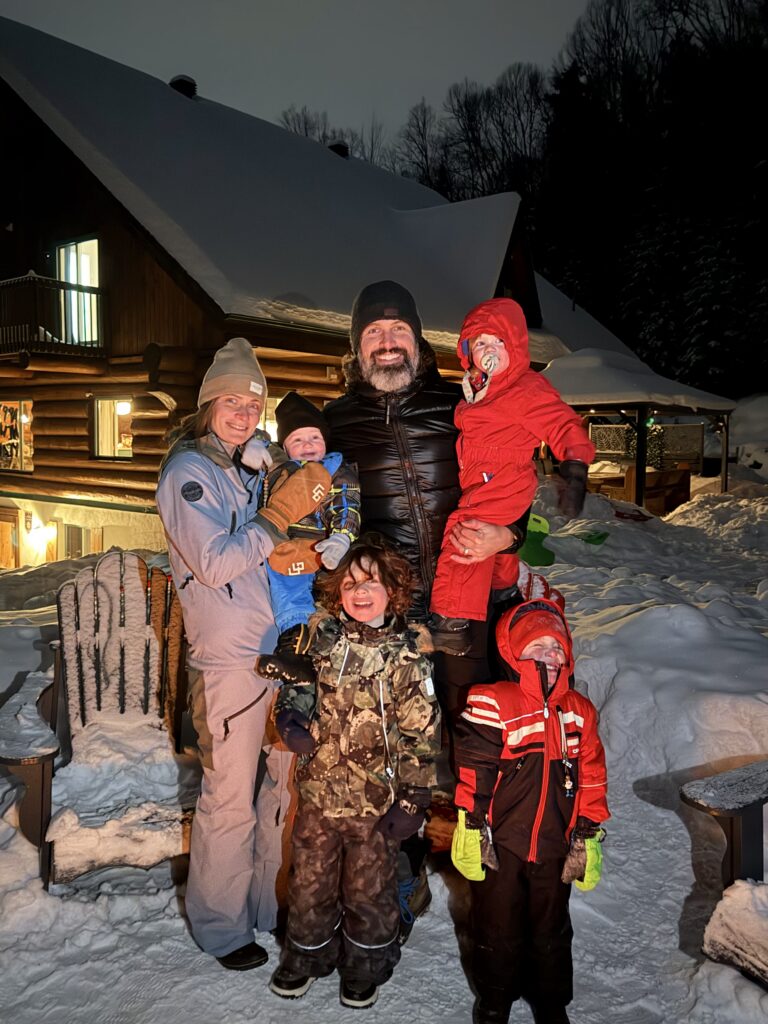
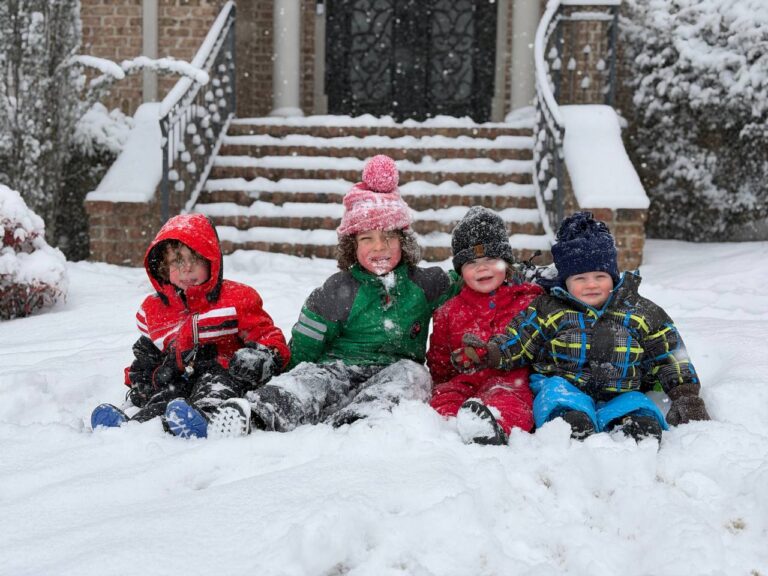
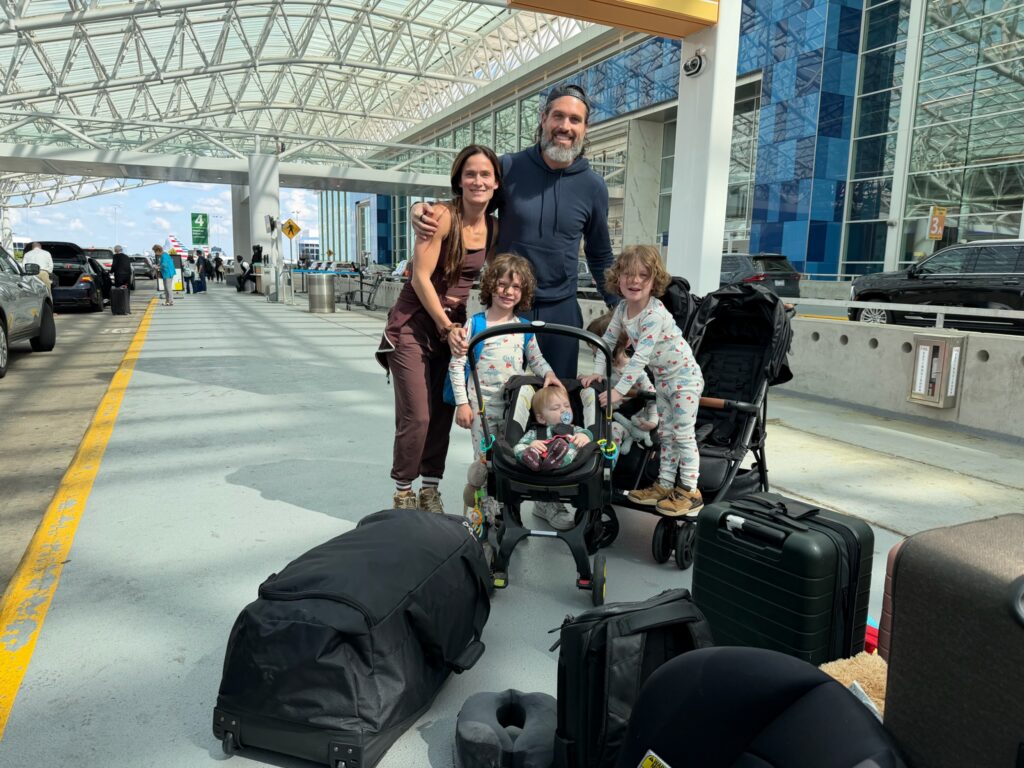
We landed in Rome, Italy on a Saturday morning. Eighteen hours door-to-door from Greenville, South Carolina. Four kids; ages 5, 4, 2, and 8 months. A respectable amount of luggage for 3 months. And roughly 45 pacifiers, if you were wondering.
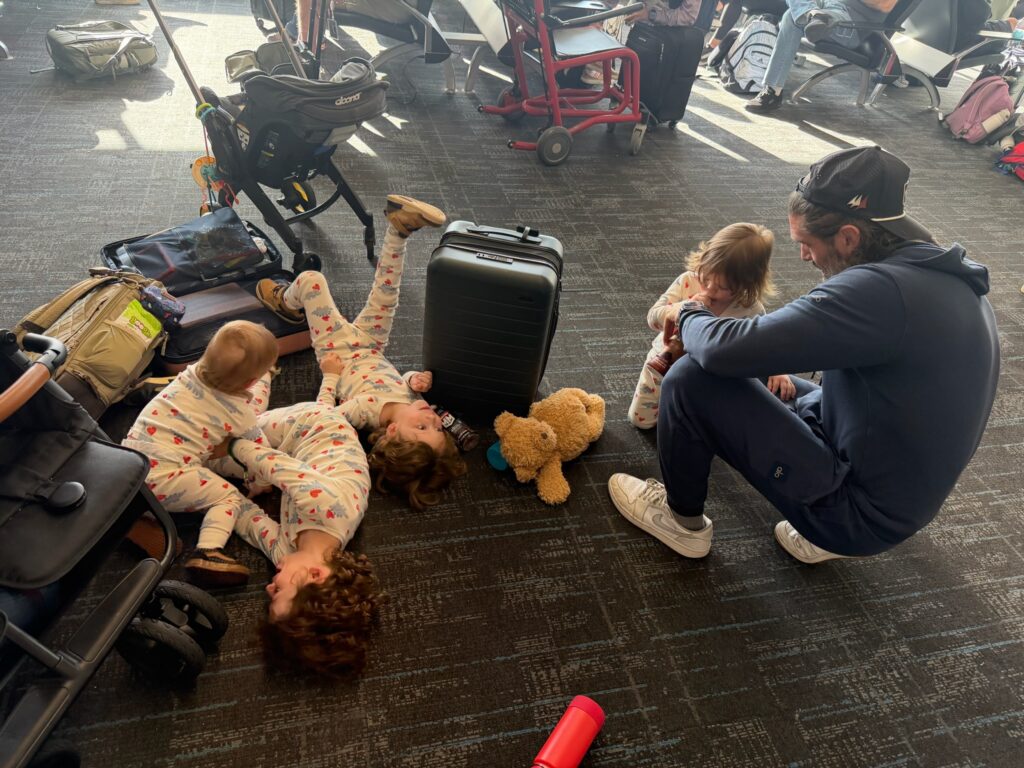
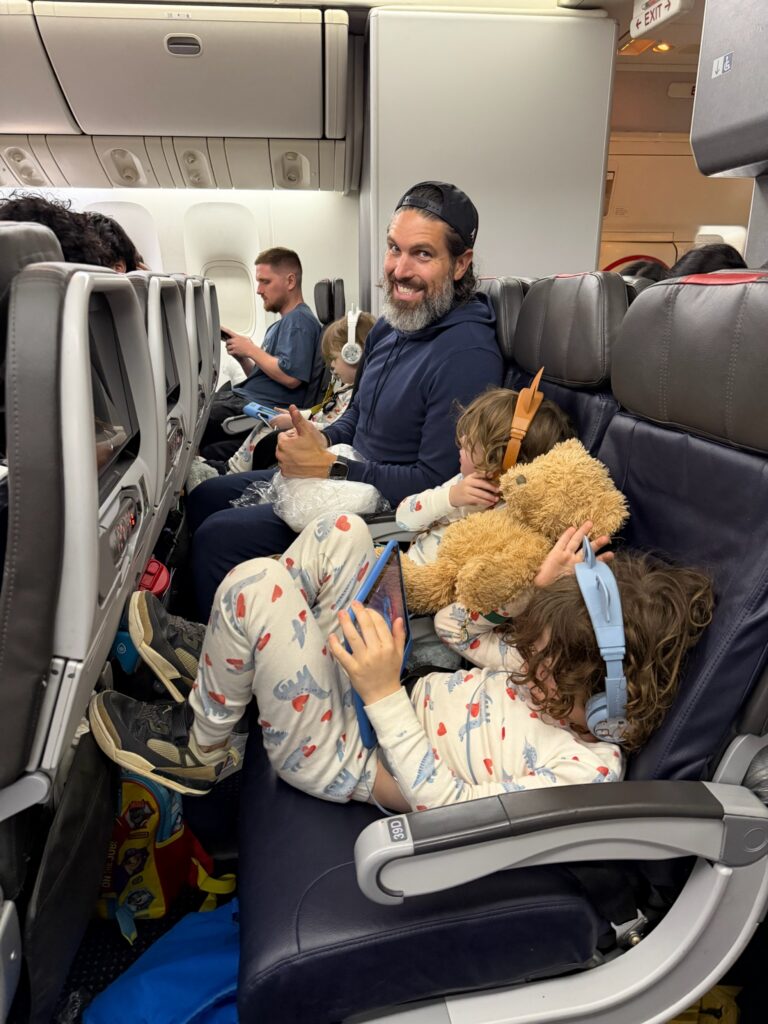
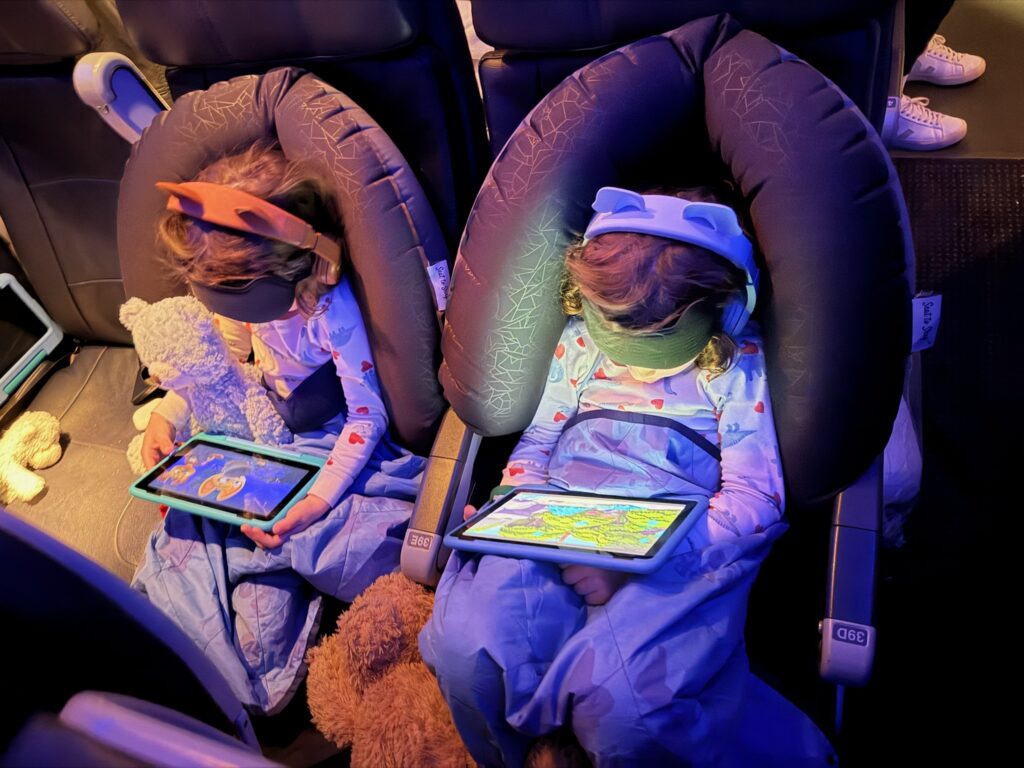
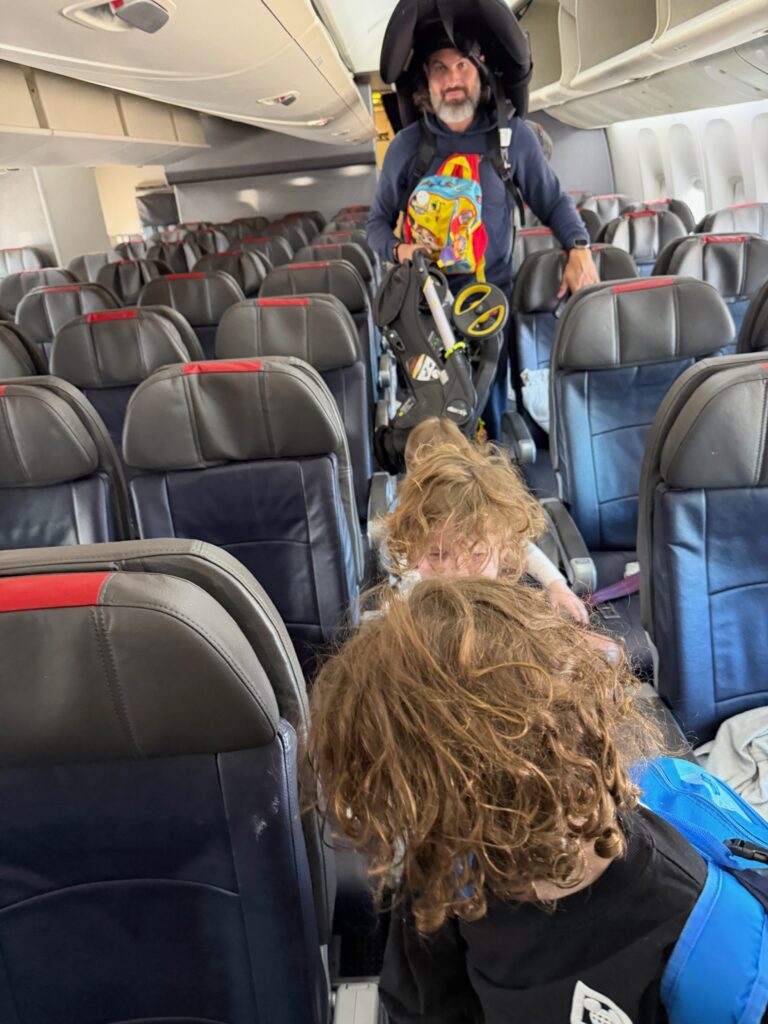
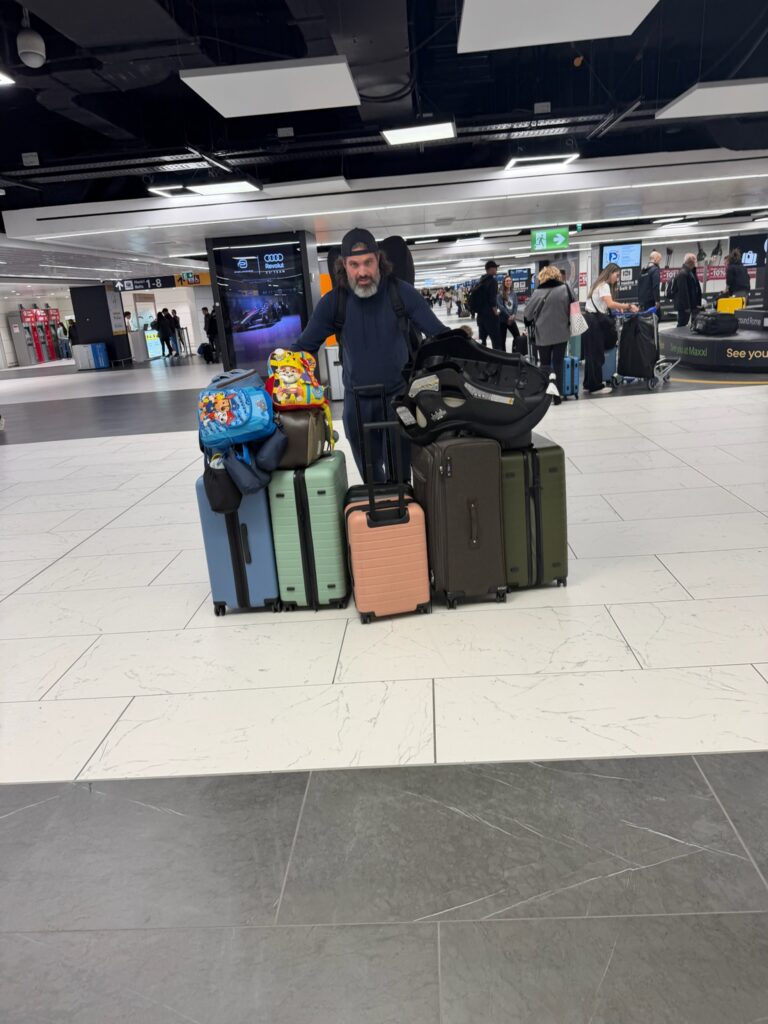
And if I’m being completely honest? The first few hours felt like one long, slow question: What did we just do?
This is the unfiltered version of our first days in Italy. The chaos, the small wins, the unexpected joys, and everything in between. If you’re considering moving abroad with young kids, or just curious what it actually looks like, keep reading.
Landing in Italy: The Reality of Arrival with Small Kids
We touched down exhausted. Overstimulated. The kids, somehow, were wide awake and hungry. We were running on micro-naps and adrenaline.
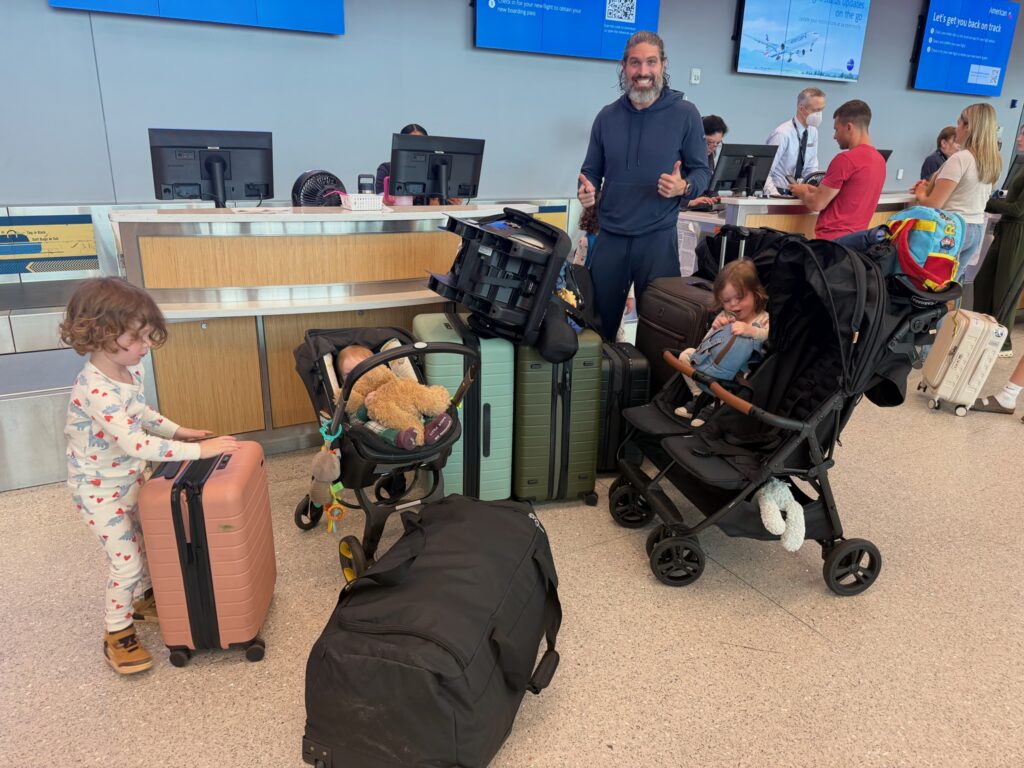
The airport was fine. What wasn’t fine was navigating stairs, not a jet bridge, down to the tarmac with two car seats, four backpacks, a diaper bag, two roller bags and a baby being carried. The pilot ended up carrying two of our kids down the stairs. Icon behavior. Truly.
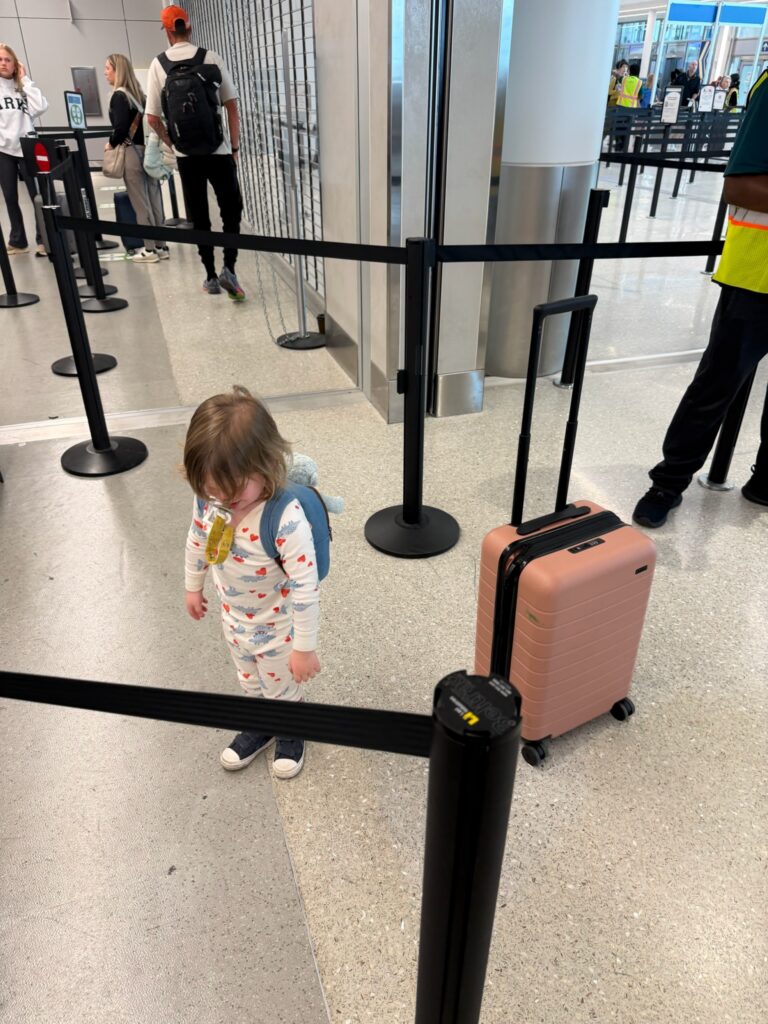
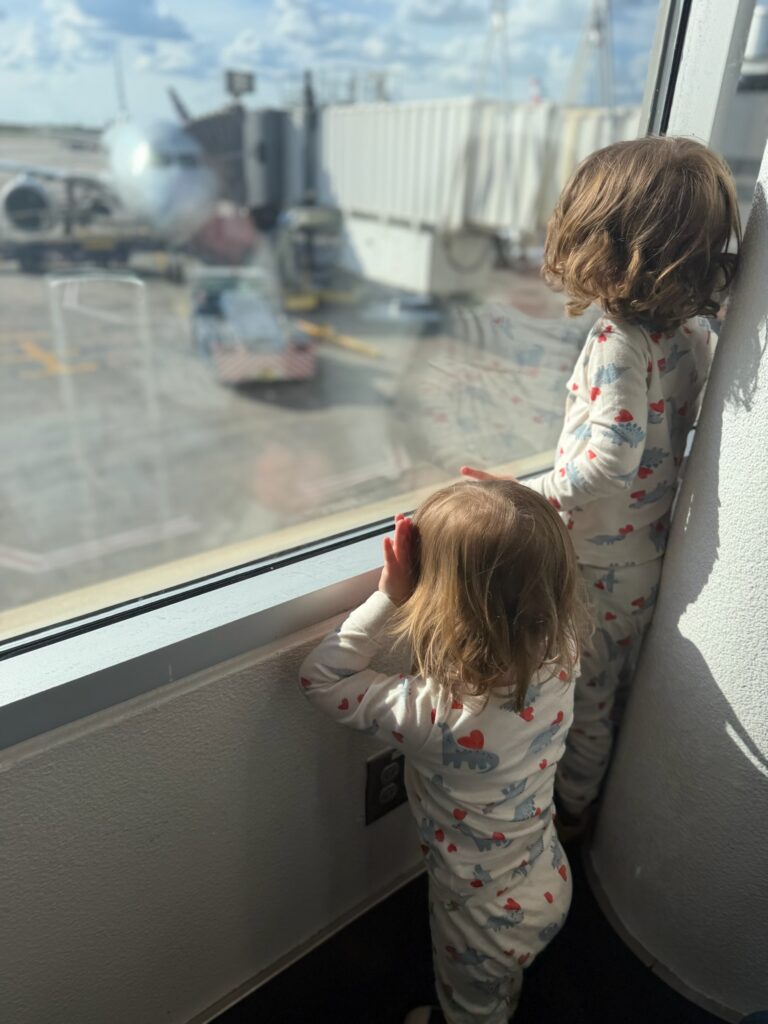
Customs moved pretty quick once they spotted the baby and moved us to the crew line. Baggage claim was its own adventure, the stroller was in an entirely different area, which we only discovered after a full loop of the terminal. But eventually, we had everything. We met our driver. And we got in the car.
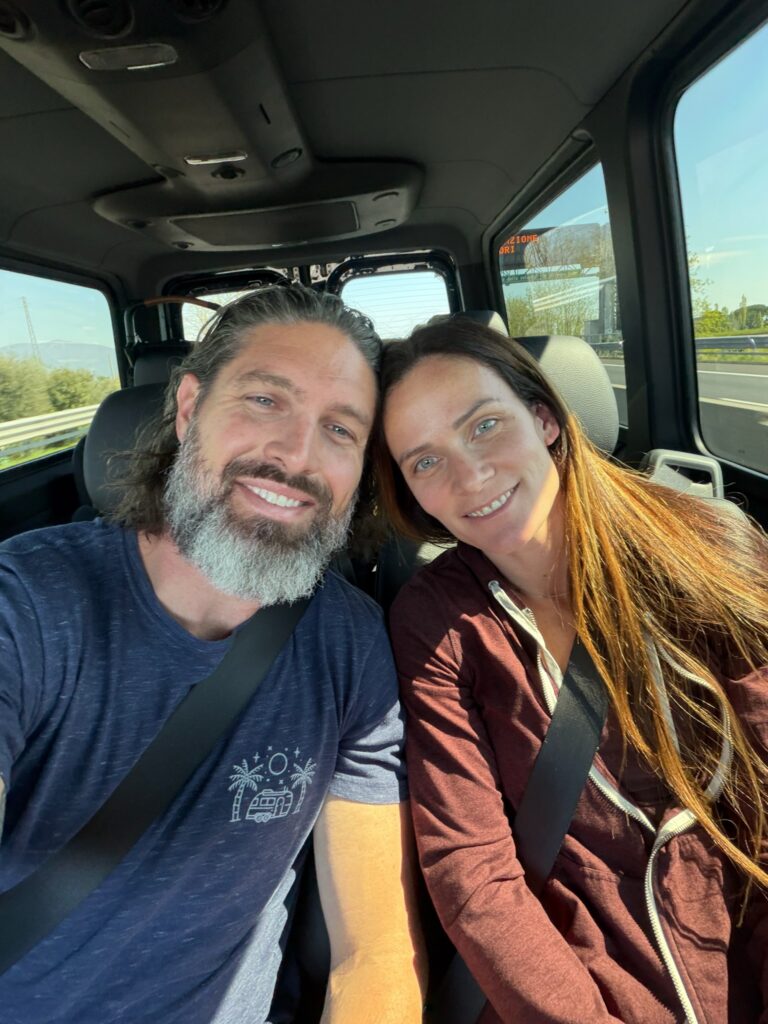
The 4-hour drive from the airport to Pistoia was… not quite what we imagined.
The kids were wide awake. Wanting us to change their shows. Asking for snacks. Being loud. Chris and I hit a wall of exhaustion that only an overnight flight with four kids can produce. We were attempting to close our eyes as much as the kids would allow, which was not much.
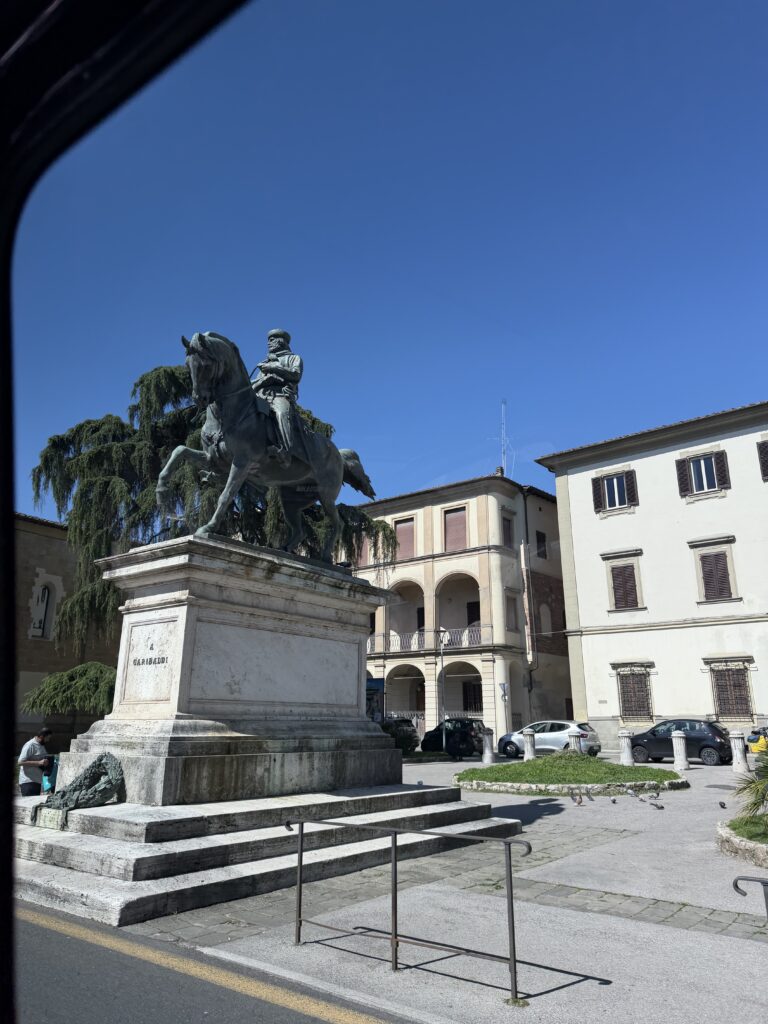
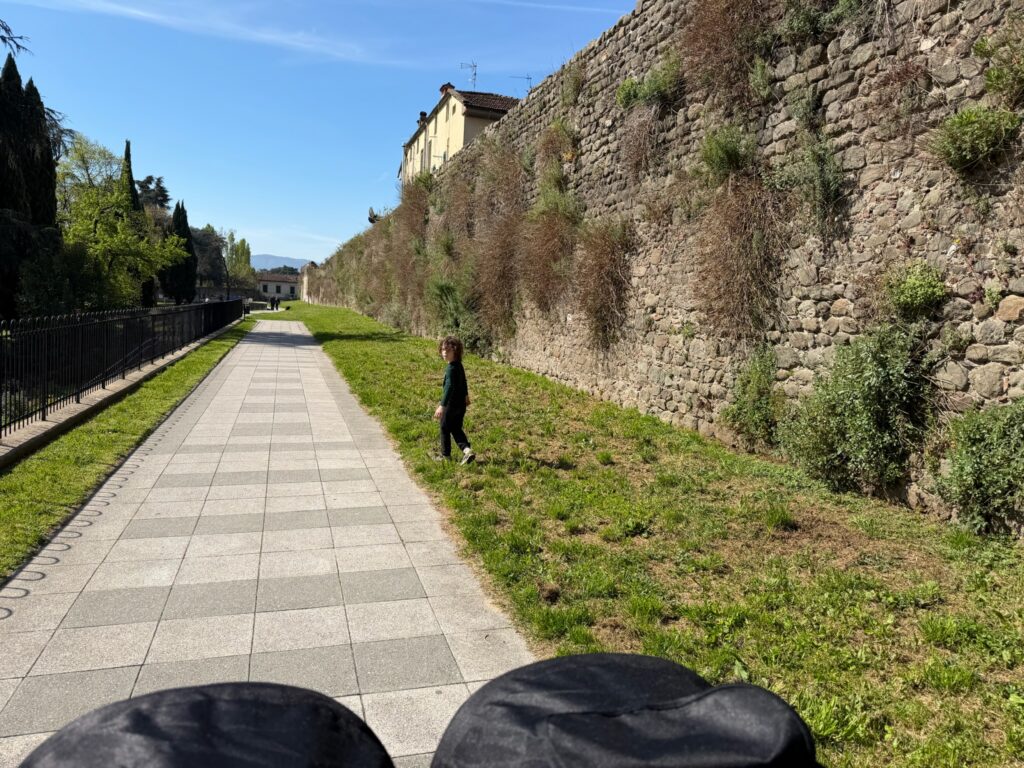
We did catch glimpses of the Italian views along the way, between throwing snacks and pacifiers back. Green hills. Terracotta rooftops. Road signs we couldn’t read. Italy was right there outside the window, and we were too tired to fully take it in and savour it. But we were actually here.
First Impressions of Pistoia: A Town That Wasn’t Expecting Us
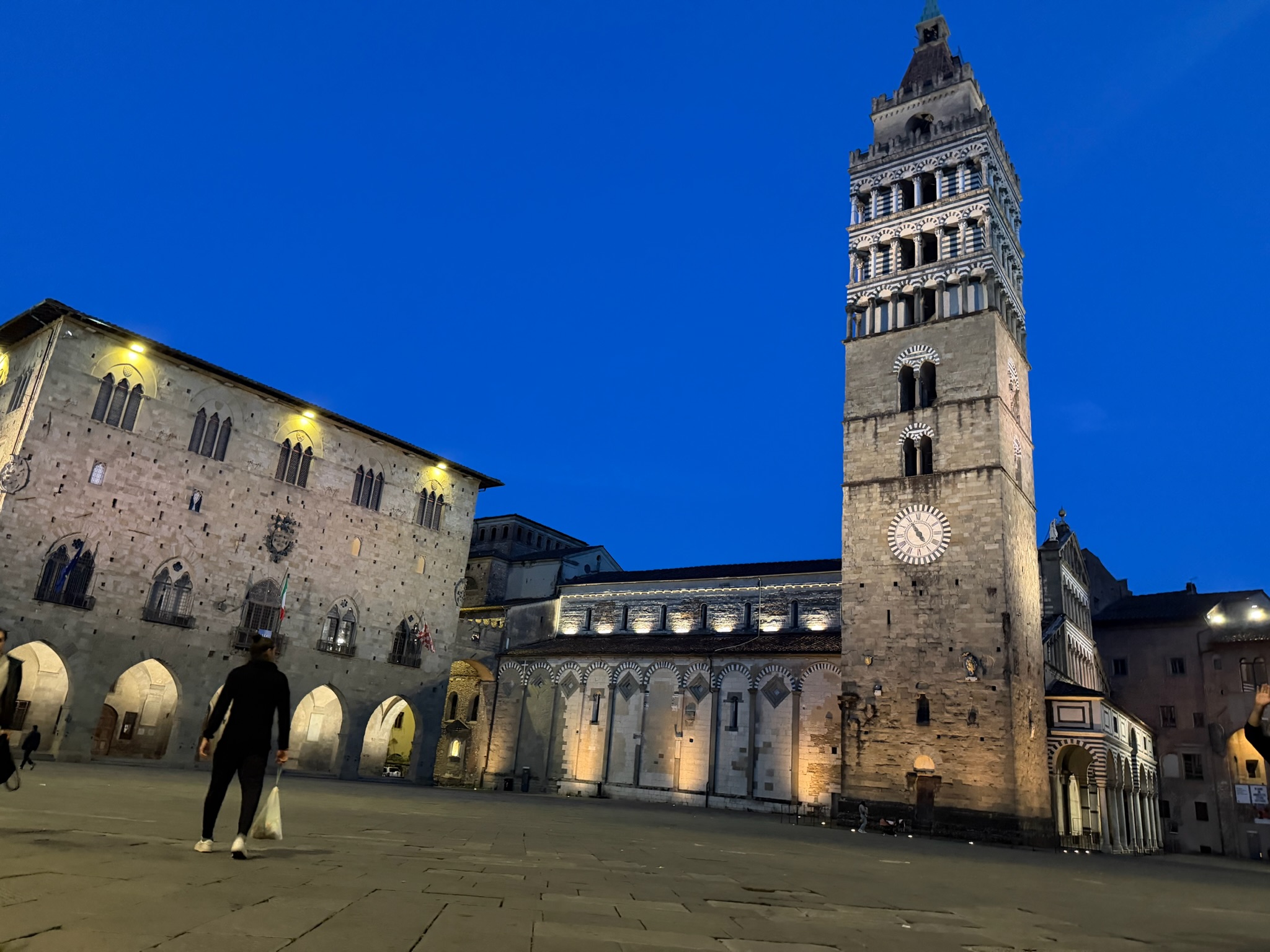
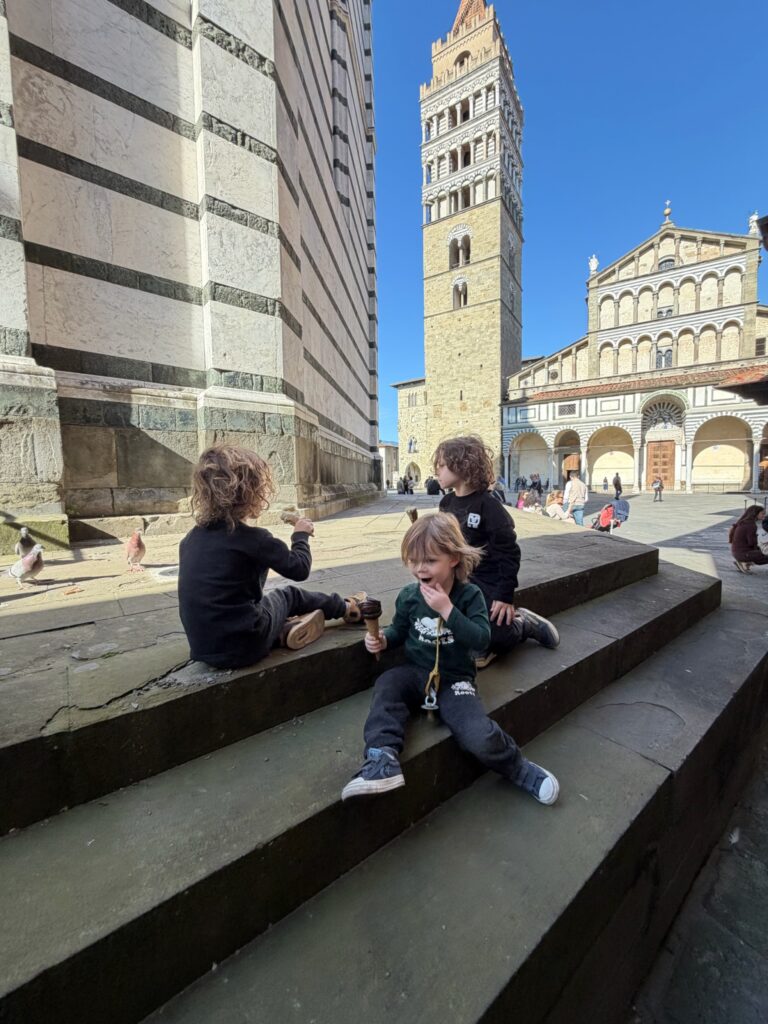
Pistoia is not a tourist town. That’s exactly why we chose it. It’s real, lived-in Italy — cobblestone piazzas, locals on bikes, fresh produce markets, and espresso that costs one euro.
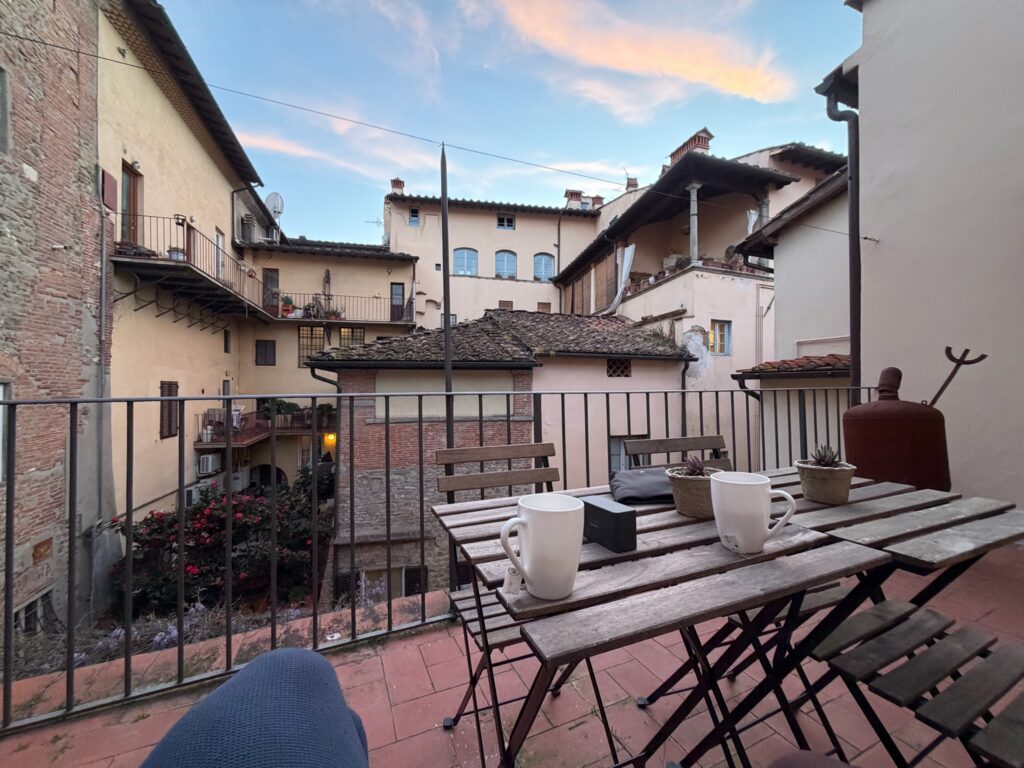
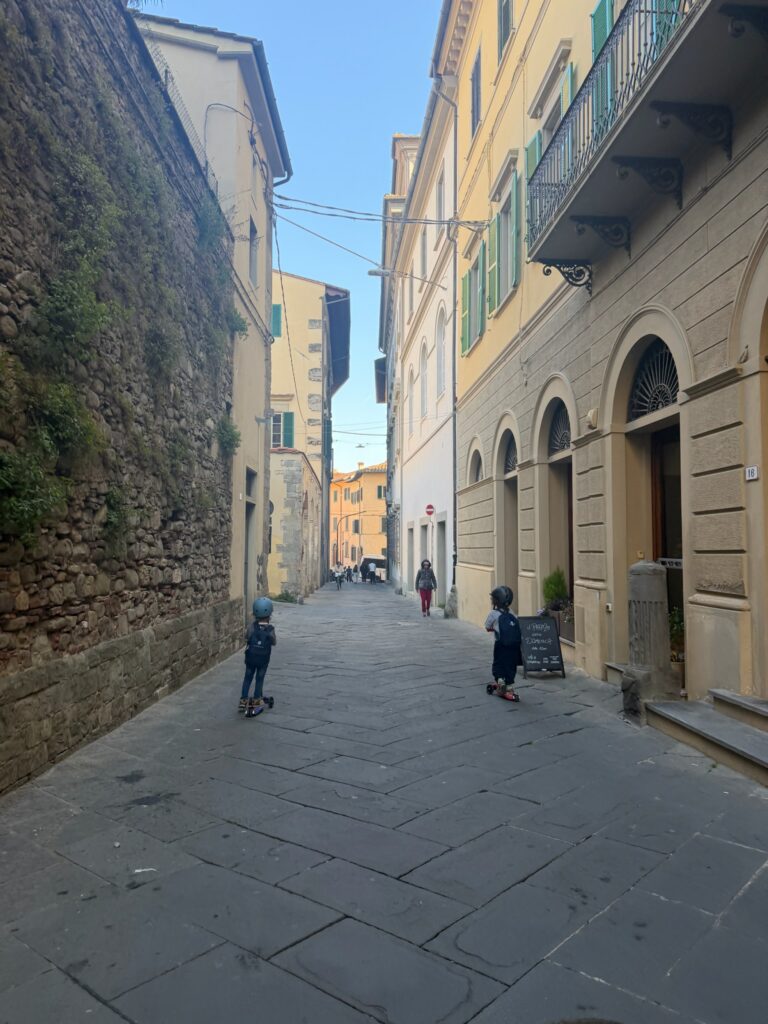
We walked into the apartment and felt it immediately: everything is different here. Smaller. Tighter. Unfamiliar in the best and most disorienting way.
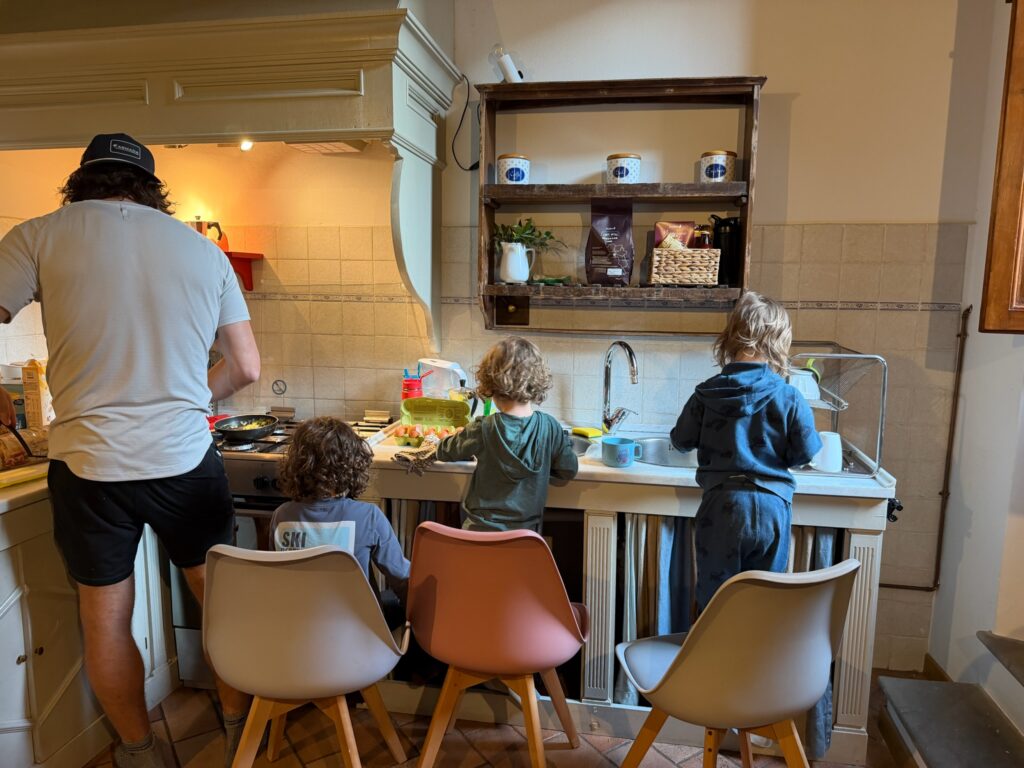
The ceilings are high. The kitchen is tiny. The washing machine is apartment-sized and has no dryer to accompany it. There’s a drying rack and a clothesline, and that is our life now. We weren’t even sure where the baby was going to sleep for the first few minutes.
Nobody warns you about the logistical puzzle of settling four kids into a foreign space when everyone is exhausted and nobody knows where anything is. But here’s what we’ve learned: you figure it out faster than you think.
The Food Reality: Timing Is Everything in Italy
Here’s a lesson we learned the hard way on day one: 4:00 PM is the worst possible time to try to eat in Italy.
Lunch is over. Dinner hasn’t started. The restaurants are closed, resting, preparing. And there you are with four hungry kids wandering the streets of an Italian town asking yourself if you’ll ever eat again.
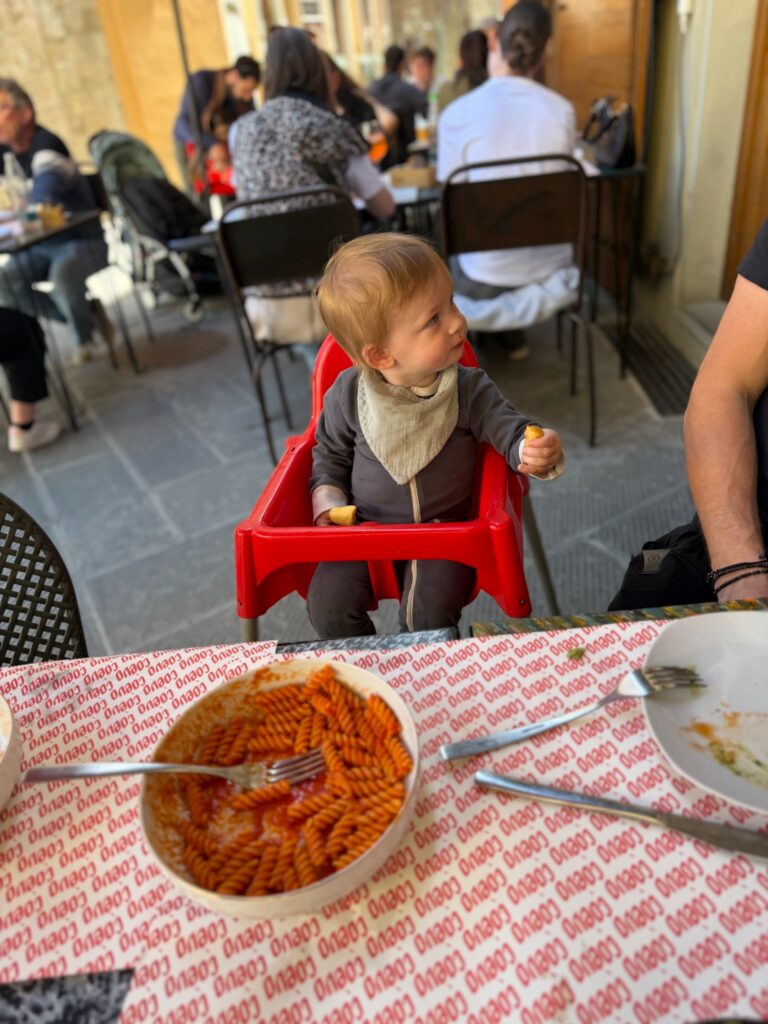
We finally found one place open. The food was, objectively, not good (think the worst McNuggets and burger you’ve ever had!). But we were so relieved to be sitting down with food in front of us that nobody cared. The kids ate. We ate. Crisis averted.
After that first stumble, we started learning the rhythms. Lunch is sacred, typically 12:30 to 2:00 PM. Dinner starts around 7:30 PM, sometimes later. So, adjust your hunger schedule accordingly, especially with small kids.
The grocery store was its own adventure. Kids everywhere. Confusion everywhere. And then, just when you think you’ve made it through, you discover you have to scan your receipt at a turnstile to exit. Of course. Italy has turnstile exits.
One detail that made us laugh: eggs come in packs of six. Our five-year-old can eat six eggs on his own. We’ve accepted that we will be at the grocery store every two days. Everything here is fresh and purchased in smaller quantities, and honestly? It’s a better way to eat.
What We Didn’t Expect: The People
This was the best surprise of the first few days, by a mile.
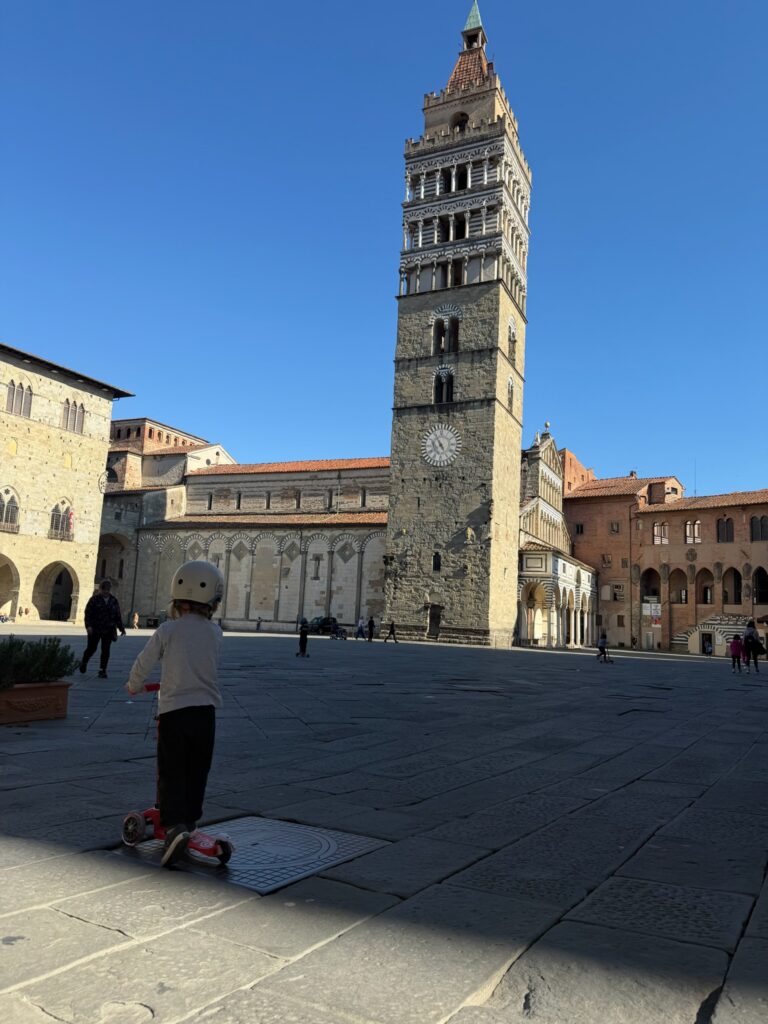
Pistoia is a small town. There are not many tourists. There is not much English spoken. And yet, within 24 hours of arriving, our kids were playing soccer in the piazza with local children for hours and didn’t want to leave. They just played.
The locals here are so warm, so kind, so genuinely welcoming to children. Kids running in the piazza isn’t an inconvenience, it’s just life. Nobody is shushing anyone. Nobody is giving you looks. Children are woven into the fabric of daily life here in a way that genuinely moved us.
It’s one of the things we hoped would be true about Italy. It is, in fact, true.
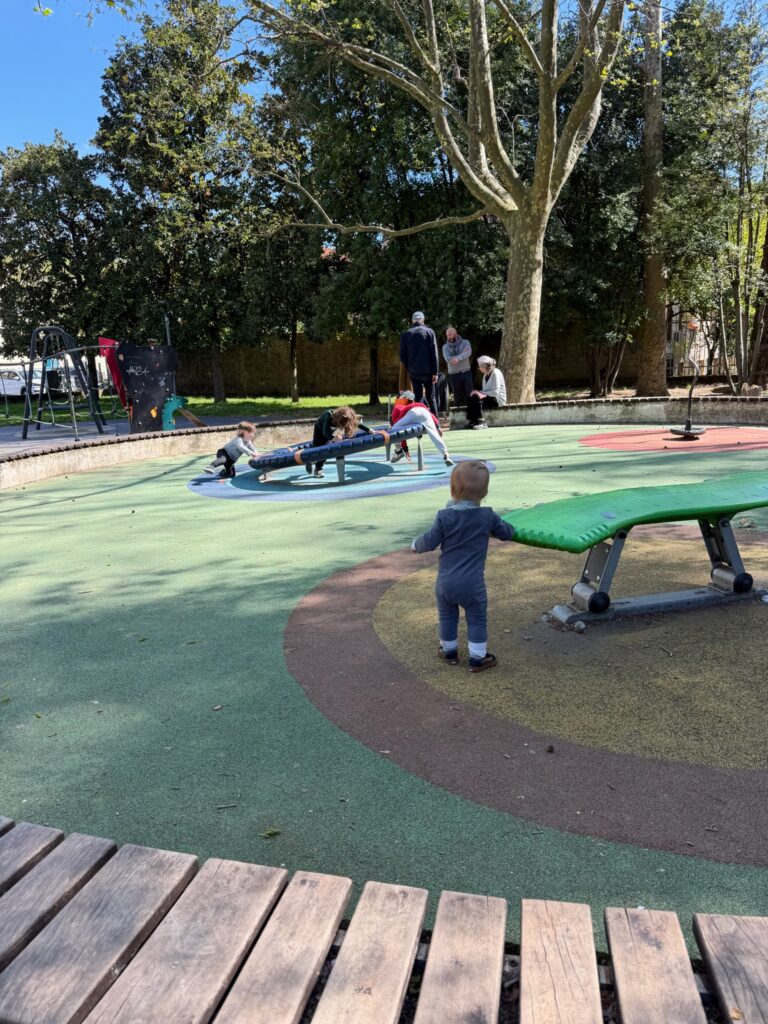
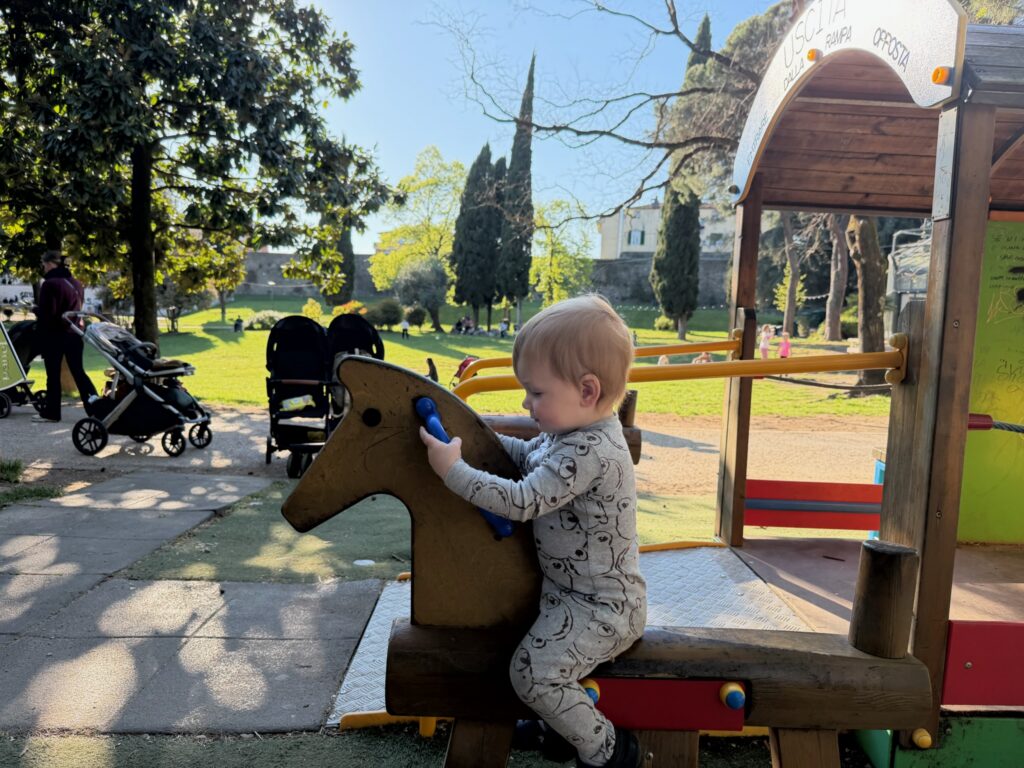
The second day looked a little different. We met up with Boundless families, a subculture entirely its own. Families from Germany, Australia, New Zealand, Canada, and the US, all doing some version of what we’re doing. Long-term travel with kids. You could spot them immediately because they were the only other English-speaking people at the park. There’s something both funny and quietly comforting about that.
Life Around the Piazza: The Unexpected Gift of Walkability
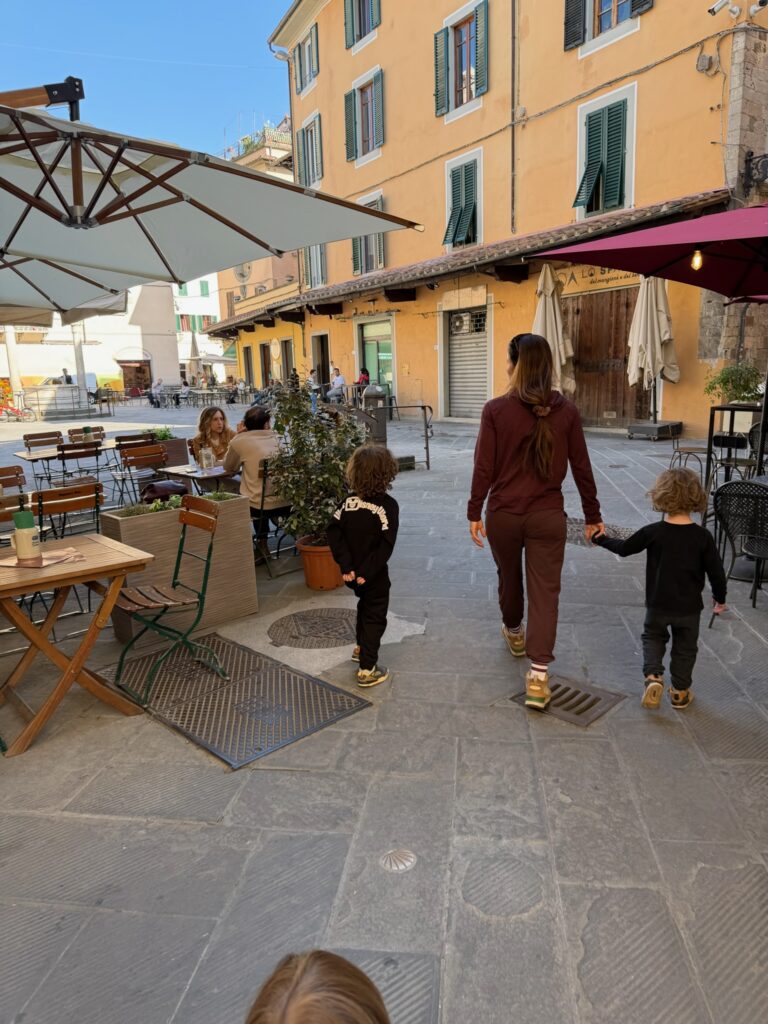
We’re staying right near the main piazza, and it has changed everything about our daily rhythm.
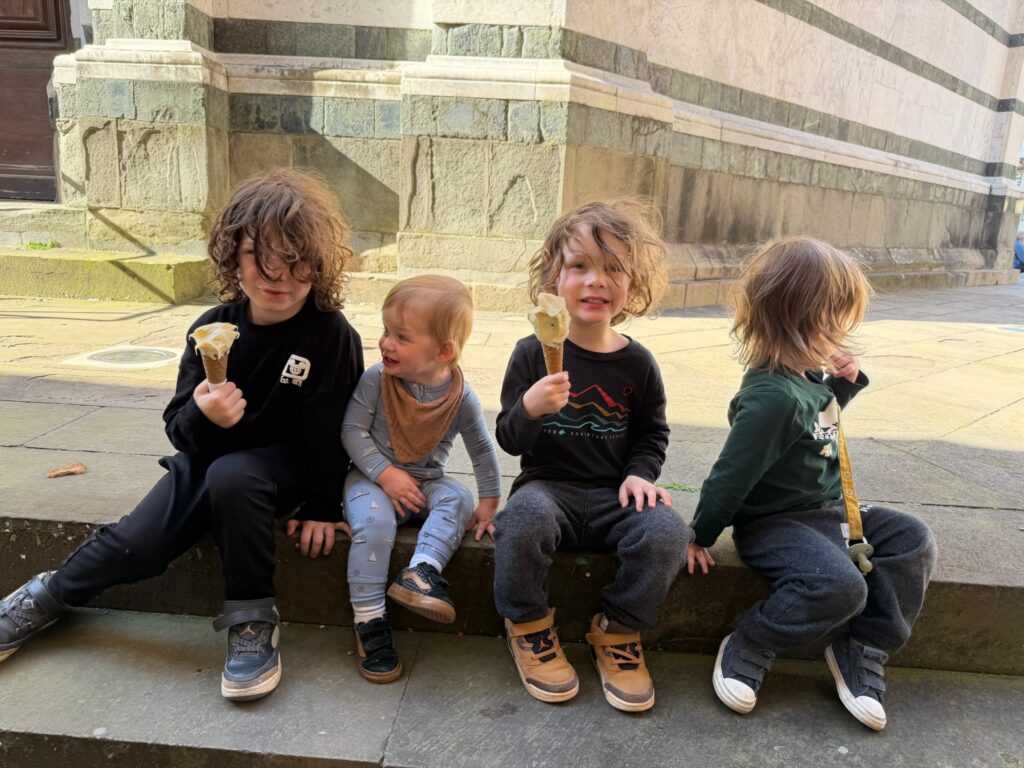
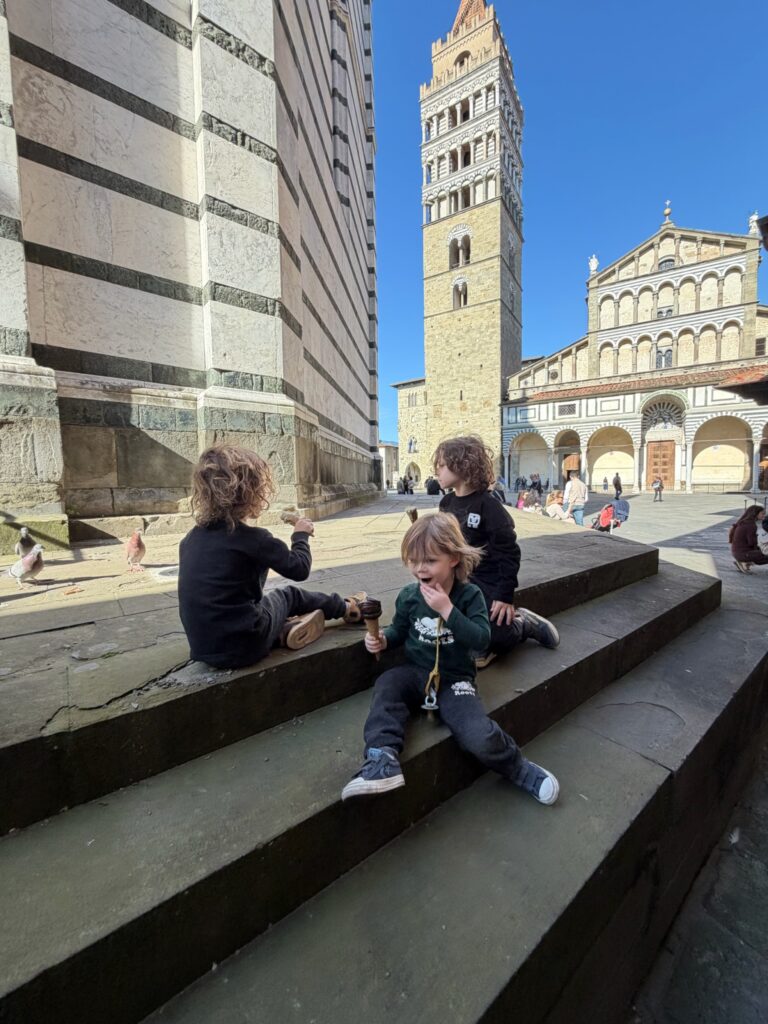
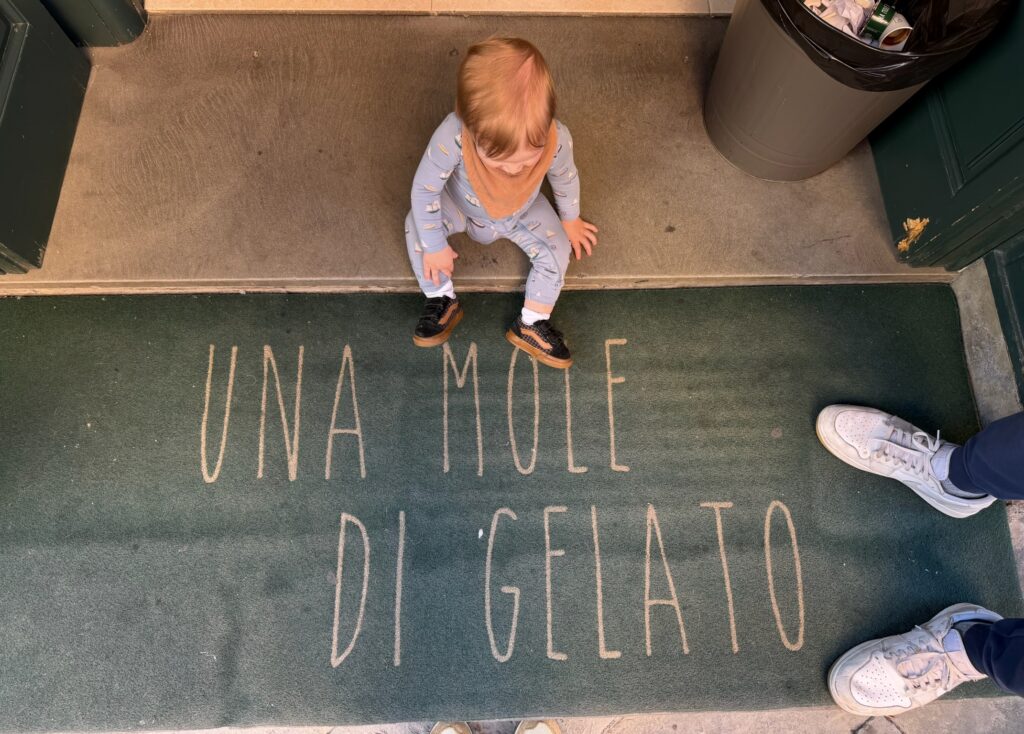
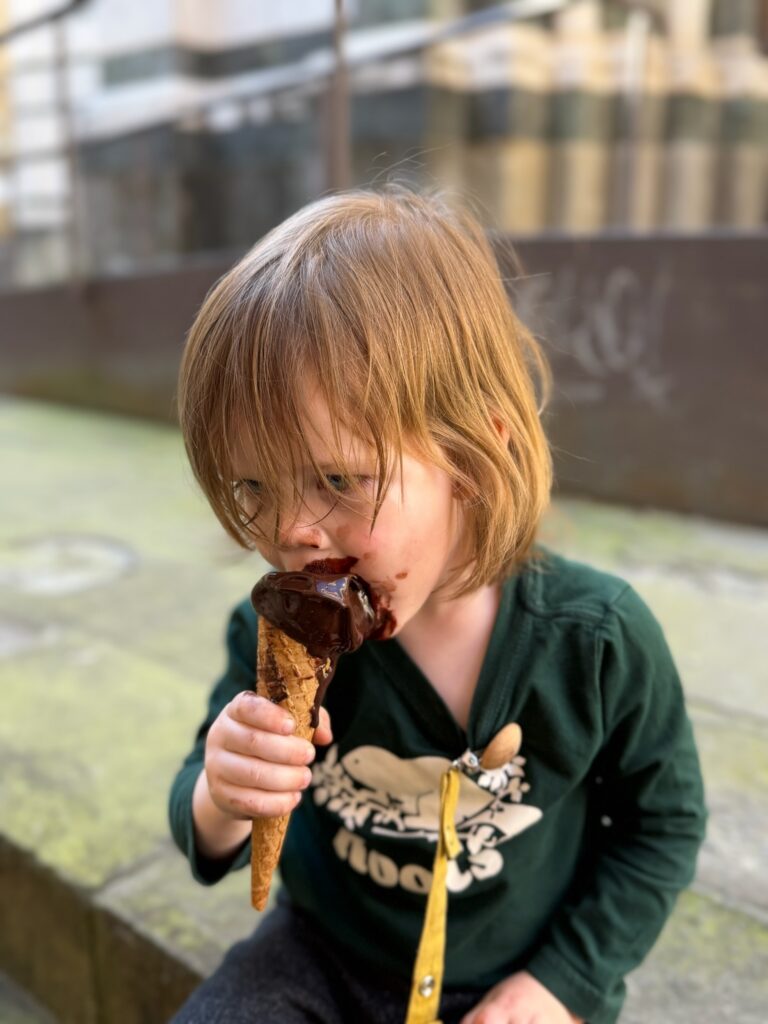
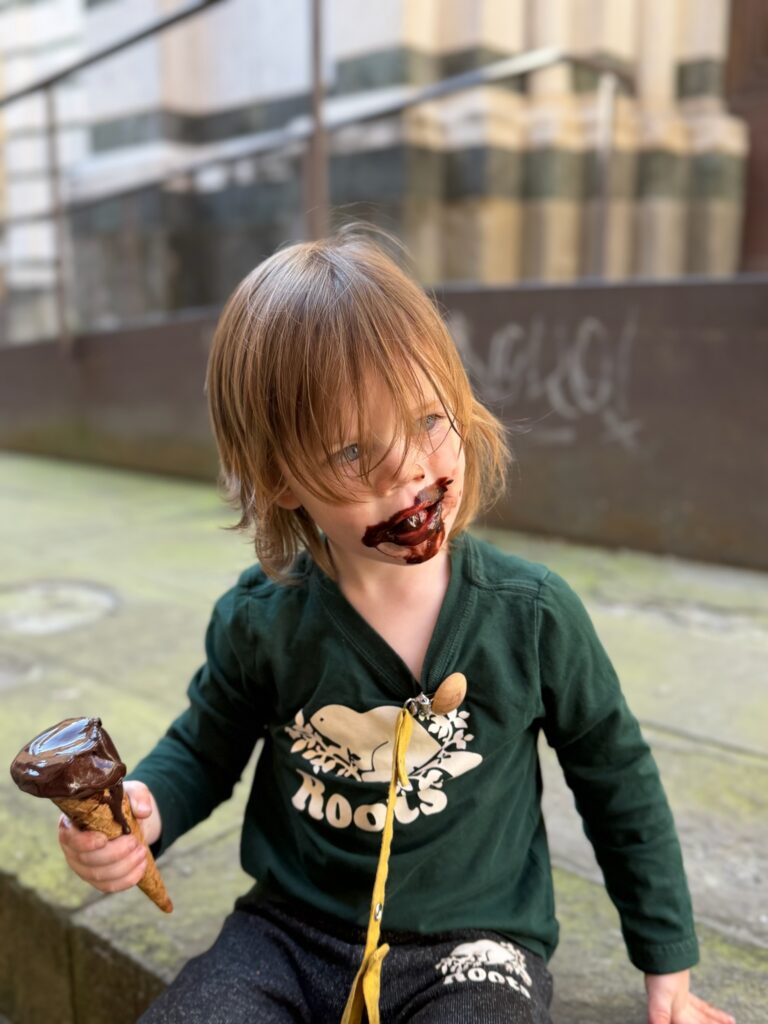
We walk everywhere. The kids run freely on cobblestones while we drink espresso outside. We’re clocking 15,000 to 17,000 steps a day without thinking about it. There’s gelato 50 feet from our front door (though we’ve learned that the chocolate gelato is very dark, very rich, and very, very messy for anyone under five).
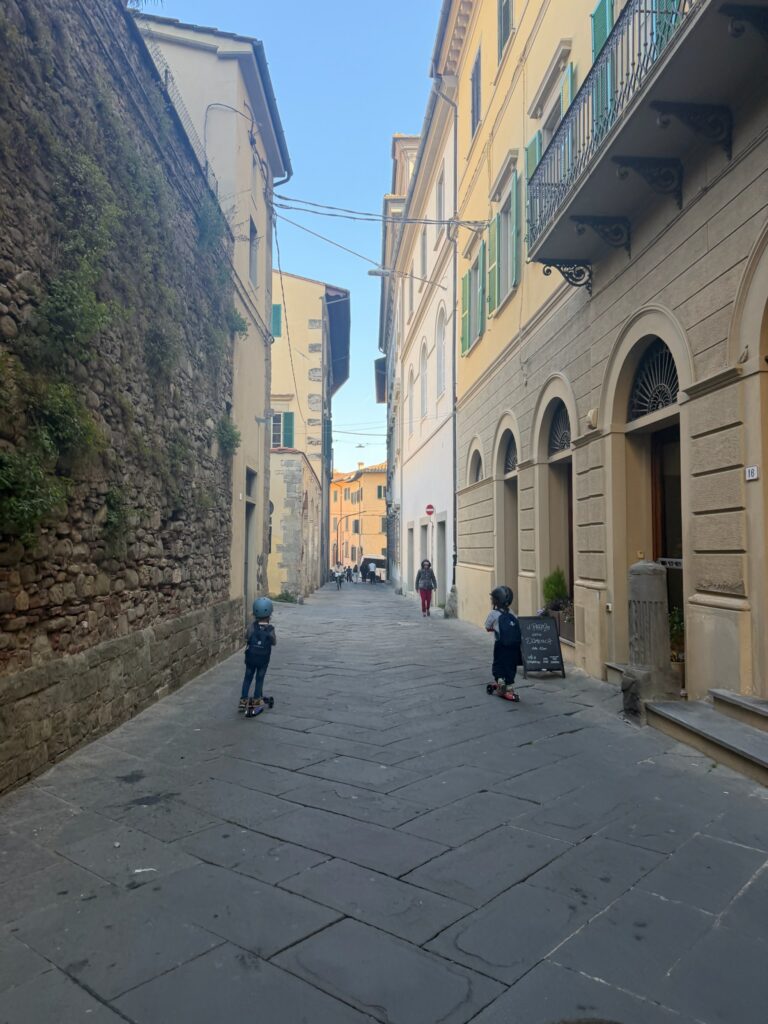
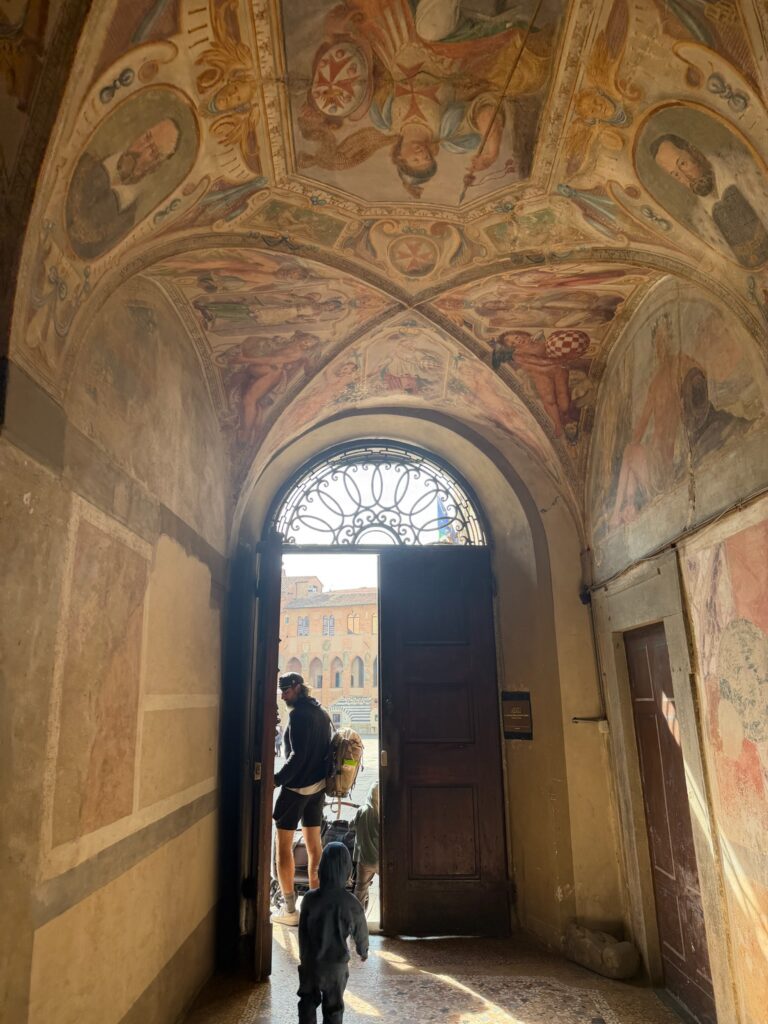
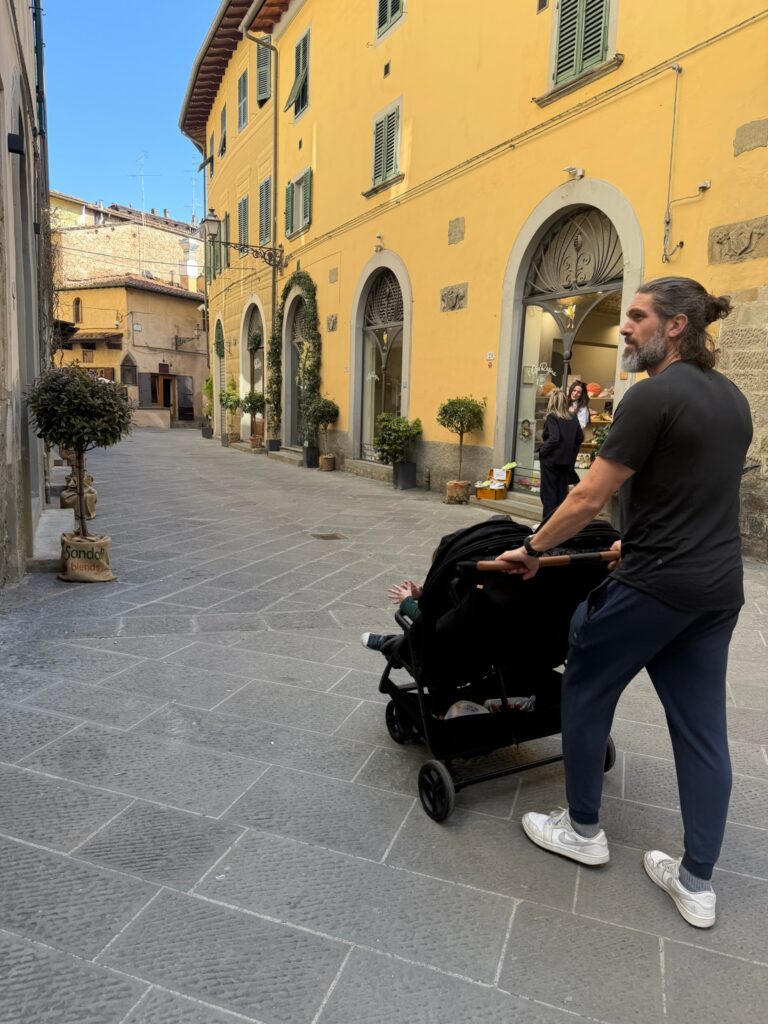
The stroller has become our most-used piece of equipment, not just for the baby, but as a place to stash everything while we wander (groceries!!). We’ve pushed it through a 16th-century frescoed hallway. We’ve rolled it over ancient cobblestones. Italy with a stroller is not always easy, but necessary with littles.
The Small Adjustments Nobody Blogs About
Let’s talk about the practical stuff, because this is what you actually want to know if you’re planning a similar move:
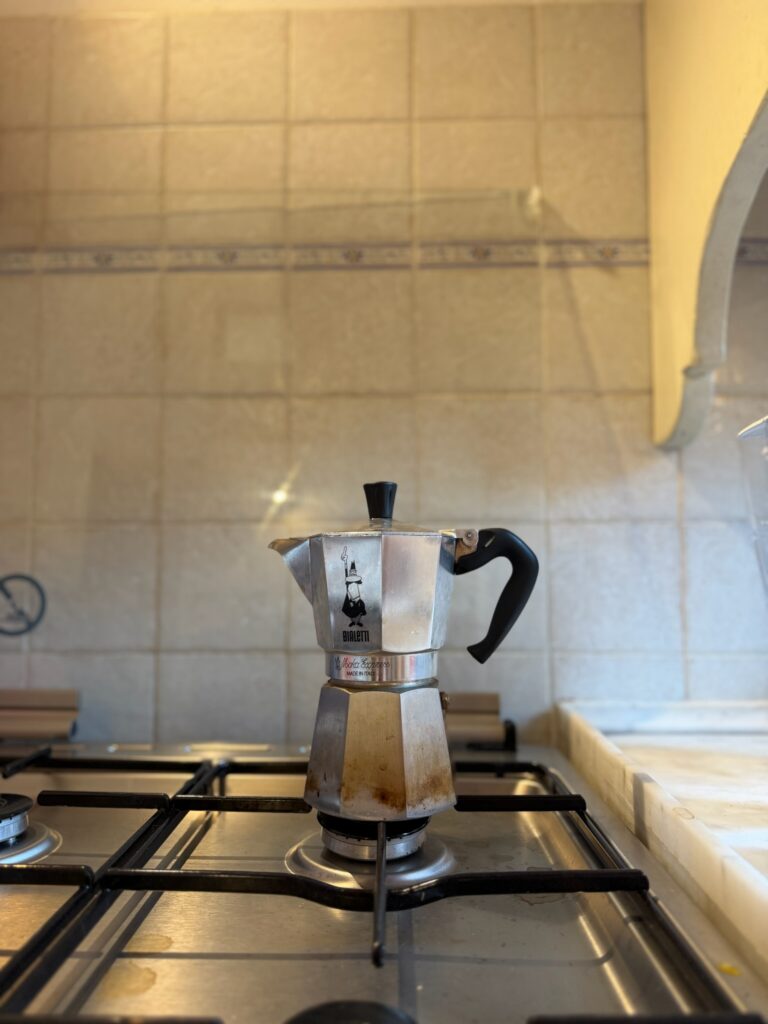
The coffee machine broke on morning one. We learned how to use a stovetop moka pot. It’s now one of our favourite parts of the morning.
The showers are small. Like, genuinely small. We’ve adapted. We are also one of the few apartments that have a bathtub – major win with babies.
The weather was colder than we expected. Pack an extra layer even in spring, Tuscany has a chill in the early mornings and evenings.
I asked for a salad at a restaurant and was told no — because it’s not in season. I respected it immediately. This is a country that takes seasonal eating seriously, and there’s something deeply right about that.
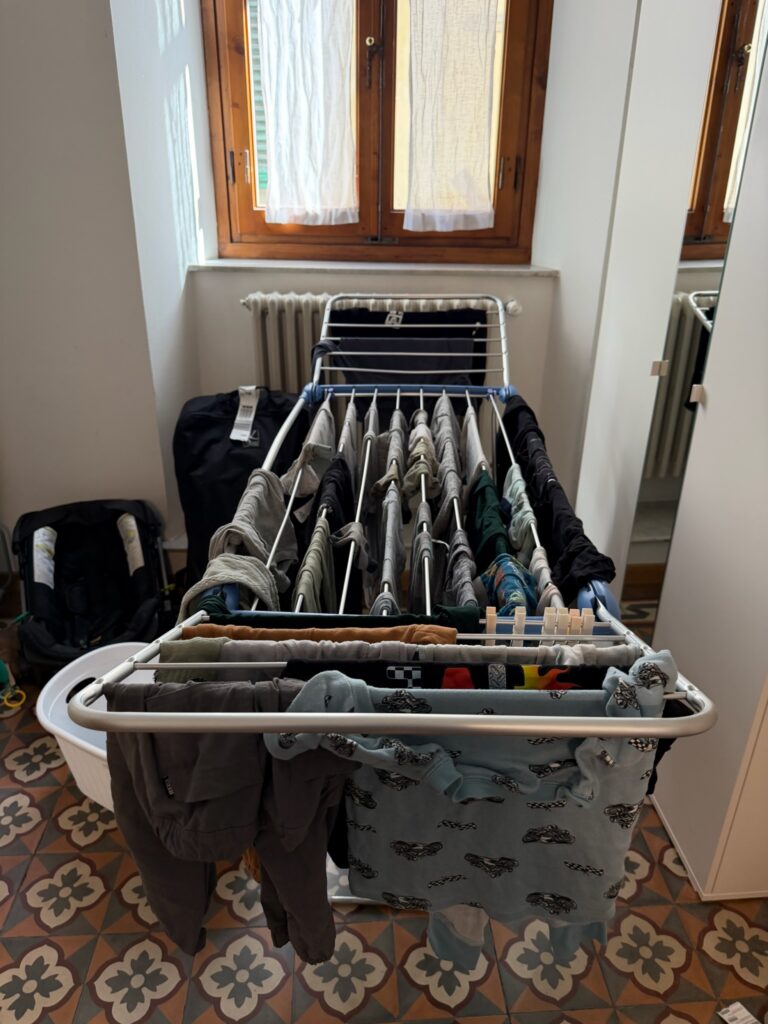
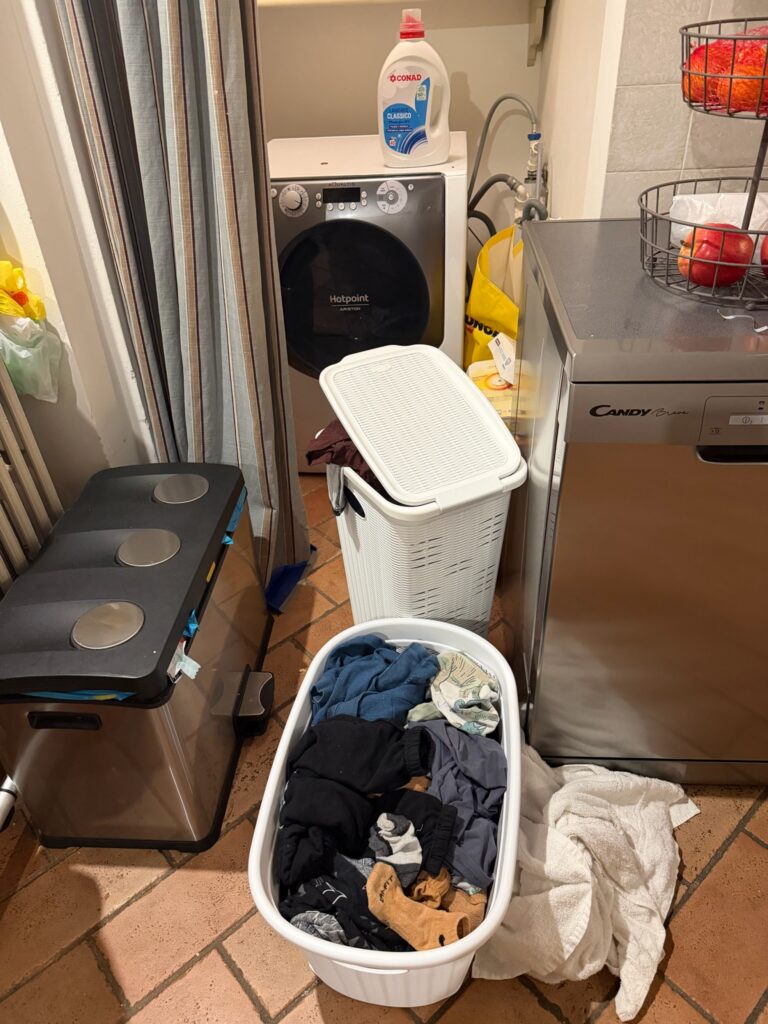
The laundry situation is a full-time job. One small washing machine, a drying rack, and the Italian sun. We do laundry constantly. Everything hangs dry.
How the Kids Are Adjusting (Honestly)
Better than us, if we’re being honest.
The 4 and 5-year-olds have taken to Italian life like they were born for it. They’re running the piazza. They’re making instant best friends. They’re eating pasta and asking for more.
The 2-year-old is figuring it out too. Some days are great, some days the extra steps hit hard, and nothing is right. We’re rolling with it.
The baby is the baby. He’s happy anywhere there are people, and Italy has a lot of people who want to look at a baby.
As parents, we’re somewhere between exhausted and enchanted. Some moments feel hard. Some moments feel like the best decision we’ve ever made. Most moments feel like both at once.
Where We Are Now: A Few Days In
A few days into this thing, and we’re less overwhelmed and more settled. The apartment feels more like home. We know which restaurants open early, found the playgrounds and identified the best piazza tables for watching the kids run without losing anyone.
It’s chaotic. It’s uncomfortable in the most growth-inducing way. It’s different from anything we’ve ever done.
And it’s really, really good.
Frequently Asked Questions About Moving to Italy with Kids
Is Italy family-friendly for families with young children? Yes, in our experience, small Italian towns are exceptionally welcoming to families with young children. Kids are celebrated here, not tolerated. We’re here as part of the Boundless program, a service that helps families relocate and live abroad by handling the logistics, legalities, and local groundwork that make moving to another country actually manageable. It has made the whole transition smoother than we ever expected. We’ll be sharing a lot more about how Boundless works and what life looks like through it in the coming weeks, so stay tuned.
What is the hardest part of the first few days in Italy with kids? Jet lag, meal timing, and the sheer adjustment of a smaller living space. The first 48 hours are the hardest. It gets better quickly.
What’s it like living in Pistoia, Italy as an American family? Pistoia is an under-the-radar Tuscan town with all the charm of the region without the tourist crowds. It’s walkable, affordable, and genuinely welcoming. We’d recommend it.
How do you handle groceries in Italy with a large family? Shop every two to three days for fresh items. Adjust to smaller quantities and seasonal availability. Eggs come in sixes. Embrace it.
Is moving abroad with four kids under six a good idea? Ask us in six months. Right now, despite the chaos, the answer feels like yes.
Follow along as we figure out life in Tuscany — one cobblestone, one gelato, and one meltdown at a time.